UEFA Research Grant Programme (UEFA RGP)
The UEFA RGP is a prestigious grant programme designed for academics working in partnership with national associations to deliver research that improves strategic decision-making in European football.
Overview
The UEFA RGP has been established to support visionary research on European football. It is for anyone working on, or already holding, a PhD who is analysing European football from a variety of academic disciplines. Once completed, the research is shared with the 55 UEFA member associations and is used for growth and development purposes. Grant applicants must submit a recommendation letter from a UEFA member association, thus ensuring that their project is undertaken in line with contemporary issues and has the highest practical value possible.
In order to foster cooperation between its member associations and European universities, UEFA allows up to three researchers based in the territories of three different national associations to submit joint applications.
Each individual project selected by the UEFA Research Grant Jury is eligible for a grant of up to €15,000 and each joint project for a grant of up to €20,000 for a nine-month research period.
Priority topic for the 26/27 cycle: Researchers are invited to submit proposals investigating how relative age, maturation and mixed training models interact to influence physical development pathways, training responsiveness and long‑term athlete development in youth football. A detailed brief on this priority topic is available for download in the Files section.
Important notice: Please note that as of 2023, research projects on medical topics are no longer accepted for the UEFA Research Grant Programme. Academics working on medical and health related research can apply to the UEFA Medical Research Grant Programme (UEFA MRGP), a specific scheme, tailor-made to medical topics and under the management of UEFA’s medical unit.


Faq
- Who Researchers at a university or equivalent institution with the support of a UEFA member association
- When Annually. Next application deadline: 31 March 2026 (17:00 CET)
- How Long 9 months’ research
- Where Research carried out at home institution
- Grant Individual grant of up to €15,000; Joint grant of up to €20,000
- Number of grants Max. 5 grants per cycle (total allocation: €75,000) + one additional grant on priority topic for 26/27
- Language English, French and German
Important dates
- 31 Mar 2026 Application deadline 2026/27 cycle
- 30 Jun 2026 Jury decision 2026/27 cycle
- 30 Nov 2026 Deadline interim report 2026/27 cycle
- 31 Mar 2027 Deadline final report 2026/27 cycle
Programme Outcomes
- Opportunity for researchers to conduct their research in the best possible conditions
- Access to both funds and data (from national associations and UEFA)
- Gain international recognition
- Opportunity for national associations and UEFA to access the latest research in order to further develop their own activities and projects
Final reports
Files
Roadmap
Application deadline for the UEFA Research Grant Programme
Priority topic: for the 26/27 cycle, UEFA is introducing a priority topic. Researchers are invited to submit proposals investigating how relative age, maturation and mixed training models interact to influence physical development pathways, training responsiveness and long‑term athlete development in youth football. A detailed brief on this priority topic is available for download in the Files section.
Please note that as of 2023, research projects on medical topics are no longer accepted for the UEFA Research Grant Programme. Academics working on medical and health related research can apply to the UEFA Medical Research Grant Programme (UEFA MRGP), a specific scheme, tailor-made to medical topics and under the management of UEFA’s medical unit.
Applicants are informed of the jury’s decision
Online introductory meeting for the UEFA Research Grant Programme
Researchers submit interim report
Researchers submit final report
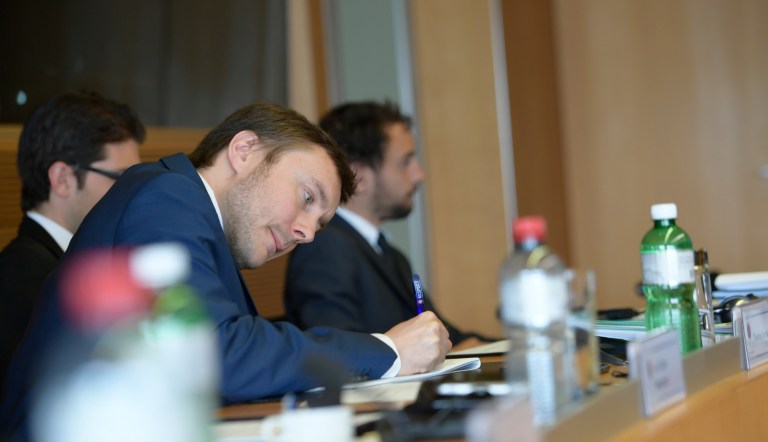
Researchers present online their final report to the RGP jury
What our students and experts say